

daikin aircon remote manual
Lost your Daikin aircon remote manual? Don't sweat it! We've got a huge collection of free, downloadable manuals to get your AC working perfectly. Find your **Daikin aircon remote manual** easily!
Daikin Aircon Remote Manual: A Comprehensive Guide
This comprehensive guide details Daikin aircon remote operation, covering variations, model identification, and button functions. It includes troubleshooting, code lists, and centralized control information.
Understanding your remote is key to optimal Daikin air conditioner performance, ensuring comfort and efficient energy usage.

Understanding Daikin Remote Control Variations
Daikin air conditioners boast a diverse range of models, and consequently, a variety of remote control designs. For each air conditioner line, Daikin frequently introduces a distinct remote control model, meaning your remote’s appearance and functionality can differ significantly from others. These variations aren’t simply cosmetic; they reflect the specific features and capabilities of the air conditioning unit they control.
Older Daikin units often utilize simpler remotes with fewer buttons, focusing on core functions like power, mode selection, and temperature adjustment. Newer, more advanced models are paired with remotes featuring a greater number of buttons, enabling control over features such as fan speed, airflow direction, timer settings, and even specialized modes like energy-saving or quiet operation.
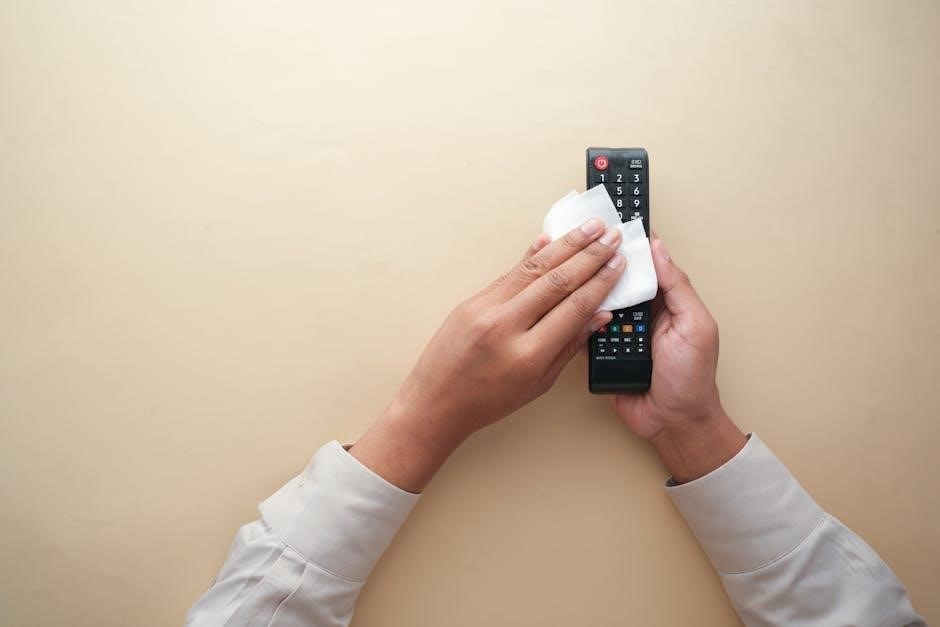
Furthermore, some remotes include LCD displays providing detailed information about the current settings and operational status. Location of buttons also varies by the model type. Recognizing these differences is crucial when seeking assistance or replacement remotes, as compatibility isn’t universal.
Identifying Your Daikin Aircon Model
Accurately identifying your Daikin aircon model is the first step towards finding the correct remote control information or a suitable replacement. This information is vital for accessing the appropriate manual, troubleshooting guides, and compatible accessories. It will also help others willing to help if you can identify the model you have.
The model name or code is typically found on a sticker or label affixed to the air conditioning unit itself. Common locations include the front panel, the side of the indoor unit, or on the back of the outdoor unit. Look for a series of letters and numbers – this is your model identifier.
For some models, model codes are displayed instead of model names. Carefully examine the unit, as the label can sometimes be small or discreetly placed. Having this information readily available streamlines the process of finding the correct remote control codes or seeking technical support. Without it, finding the right resources can be significantly more challenging.
Locating the Model Code on Your Unit
Finding the model code on your Daikin air conditioning unit is crucial for accessing specific remote control instructions and troubleshooting information. The location of this code can vary depending on the unit’s design, but several common areas should be checked.
Begin by inspecting the front panel of the indoor unit. Often, a sticker is placed prominently, displaying the model name and code. If not found there, check the sides of the indoor unit – the code might be on a label affixed to one of the panels. Don’t overlook the back of the indoor unit; a label is frequently located there.
For outdoor units, the model code is typically found on a sticker attached to the casing; Thoroughly examine all sides of the outdoor unit. Remember that the code usually consists of a combination of letters and numbers. If you encounter difficulty, consult the original installation manual or contact Daikin support for assistance.

Daikin Remote Control Button Functions ౼ Overview
Daikin remote controls, while varying slightly by model, share core functionalities. The Power button initiates operation, while Mode allows selection between cooling, heating, auto, dry, and fan-only settings. Temperature adjustment buttons increase or decrease the desired room temperature.
Fan Speed controls airflow intensity – typically offering options like auto, low, medium, and high. The Airflow Direction buttons adjust the louvers, directing air vertically or horizontally. The Timer function enables setting automatic on/off times for convenience and energy savings.
Additional buttons may include Quiet mode for reduced noise, Economy mode for energy efficiency, and a Display button to toggle the remote’s screen. Some remotes feature a Self-Diagnosis button for basic error checking. Location of buttons varies by model type. Understanding these functions unlocks full control over your Daikin air conditioning system.
Basic Operations: Power, Mode, and Temperature
Initiating operation is simple: press the Power button, indicated by a power symbol, to turn the air conditioner on or off. The Mode button cycles through available settings. Cool provides cooling, Heat delivers warmth, Auto automatically selects cooling or heating based on room temperature, Dry reduces humidity, and Fan circulates air without temperature adjustment.
Temperature control is achieved using the up and down arrow buttons. Each press adjusts the set temperature by one degree Celsius or Fahrenheit, depending on your unit’s setting. The current set temperature is displayed prominently on the remote’s screen. Ensure the desired temperature is comfortable and energy-efficient.

These three functions – Power, Mode, and Temperature – form the foundation of Daikin aircon operation. Mastering these basics allows for immediate climate control and personalized comfort. Remember to allow a few moments for the unit to reach the set temperature after adjustments.
Fan Speed Control and Airflow Direction
Daikin remotes offer precise Fan Speed Control. Typically, buttons labeled ‘Low’, ‘Medium’, ‘High’, and ‘Auto’ regulate airflow intensity. ‘Auto’ adjusts fan speed based on the temperature difference between the setpoint and the room temperature, optimizing comfort and energy efficiency. Some models feature additional, more granular fan speed settings.
Airflow Direction is equally customizable. Dedicated buttons control the horizontal and vertical louvers. The ‘Swing’ function automatically oscillates the louvers for wider air distribution. You can often set the louvers to specific positions, directing airflow upwards, downwards, or horizontally to avoid drafts or focus cooling/heating on specific areas.
Experiment with these settings to find the optimal combination for your room layout and personal preferences. Proper airflow direction enhances comfort and ensures even temperature distribution throughout the space. Remember to periodically clean the air filters for optimal performance.
Using the Timer Function on Your Daikin Remote
Daikin remotes commonly feature both ‘On’ and ‘Off’ timer settings for convenient and energy-efficient operation. The ‘Timer’ button initiates the timer programming mode. Use the arrow keys to set the desired start time for the ‘On’ timer, specifying when you want the air conditioner to automatically turn on.
Similarly, program the ‘Off’ timer to schedule automatic shutdown. This is ideal for falling asleep with the AC running and automatically turning it off later, saving energy. Some models allow for multiple timer settings, offering greater flexibility. Ensure the clock on your remote is accurately set for precise timer operation.
The remote display will indicate when the timer is active. To cancel a timer, simply press the ‘Timer’ button again or adjust the settings to the current time. Utilizing the timer function optimizes comfort while minimizing energy consumption, contributing to lower utility bills.
Understanding the Display Icons
The Daikin remote display utilizes various icons to communicate the air conditioner’s status and settings. A snowflake icon indicates cooling mode, while a sun icon signifies heating. A fan icon represents fan-only operation, circulating air without temperature adjustment. The ‘DRY’ icon activates the dehumidification function, removing moisture from the air.
Temperature settings are displayed numerically, and arrow icons show whether the temperature is being increased or decreased. Fan speed is indicated by lines or bars, with more lines representing higher speeds. The timer icon illuminates when a timer is active, and a specific code might flash during self-diagnosis or error conditions.
Understanding these icons is crucial for effectively controlling your Daikin air conditioner. Refer to your specific model’s manual for a detailed explanation of all displayed symbols. Recognizing these visual cues allows for quick and accurate adjustments to achieve your desired comfort level.
Programming a Universal Remote for Daikin Aircons
Programming a universal remote to control your Daikin aircon requires finding the correct code for your specific model. Begin by powering on your Daikin unit and entering programming mode on the universal remote – consult your universal remote’s manual for instructions. Typically, this involves pressing a ‘Setup’ or ‘Code Search’ button.
You’ll then need to enter a three-digit code. Common Daikin codes include ranges like 751-774 and 171-183, though these may not work for all models. Websites list codes for Wellclima Smart and Superior AirCo units. If the initial code doesn’t work, systematically try other codes from the Daikin list within your universal remote’s manual.
Test each code by attempting basic functions like power on/off and temperature adjustment. If the remote successfully controls your Daikin aircon, save the code. If none of the listed codes work, some universal remotes offer an auto-search function to scan for the correct code.
Common Daikin Remote Codes (3-Digit Codes)
When programming a universal remote for your Daikin air conditioner, utilizing the correct three-digit code is crucial for successful operation. Daikin employs a variety of codes depending on the model and region, making a definitive list challenging. However, several codes are frequently reported as functional.
Commonly cited codes include ranges such as 751-774, often suggested for newer Daikin units. Older models may respond to codes within the 171-183 range; It’s important to note that these are not universally applicable, and success varies significantly. Codes specifically for Wellclima Smart and Superior AirCo Daikin units are also available online and in universal remote code databases.
Remember to consult your universal remote’s manual for the specific code entry procedure. If the initial code attempt fails, systematically try other codes within these ranges. Online resources and forums dedicated to universal remote programming can also provide model-specific code suggestions.
Specific Codes for Wellclima Smart and Superior AirCo
Daikin air conditioners marketed under the Wellclima Smart and Superior AirCo brands often require specific codes when programming a universal remote control. These models, while utilizing Daikin technology, sometimes necessitate codes differing from standard Daikin units.
While a definitive, exhaustive list is difficult to maintain due to regional variations and model updates, several codes have proven successful for users. Commonly reported codes for Wellclima Smart units include variations within the 751-774 range. Superior AirCo models may respond to codes in the 171-183 spectrum, though results are not guaranteed.
It’s crucial to systematically test multiple codes, as compatibility can vary. Online universal remote code databases and dedicated forums often contain user-submitted codes specifically for these brands. Always refer to your universal remote’s manual for the correct code entry procedure and remember to test each code thoroughly to confirm functionality.
Troubleshooting: Remote Not Working
If your Daikin aircon remote isn’t functioning, begin with the simplest checks. First, ensure fresh batteries are correctly installed, paying attention to polarity. Weak batteries are a frequent cause of remote failure. Next, verify there’s a clear line of sight between the remote and the indoor unit’s receiver – obstructions can interfere with the signal.
Try resetting the remote by removing the batteries for several minutes, then reinserting them. If the issue persists, inspect the remote’s infrared (IR) emitter for damage. A malfunctioning emitter won’t transmit the signal. Confirm the indoor unit is receiving power and isn’t locked in a mode preventing remote operation.
Consider whether a transmission error might be occurring, especially with centralized control systems. Check connector integrity. If using a universal remote, double-check the programmed code for your Daikin model. If none of these steps resolve the problem, the remote may require replacement.
Remote Control Range and Battery Replacement
Daikin aircon remotes typically operate effectively within a range of approximately 7 meters (23 feet). However, this range can be reduced by obstacles like furniture, walls, or even strong sunlight interfering with the infrared signal. Maintaining a clear line of sight maximizes the remote’s operational distance.
Battery replacement is straightforward. Most Daikin remotes utilize AAA or AA batteries – consult your specific model’s manual for confirmation. When the display appears dim, or the remote’s response becomes sluggish, it’s time for new batteries. Always replace all batteries simultaneously to ensure consistent performance and prevent potential leakage damage.
Proper battery disposal is crucial; adhere to local regulations for recycling. Avoid mixing old and new batteries, or different battery types. Regularly check battery contacts for corrosion and clean them gently if necessary. A well-maintained remote, with fresh batteries, ensures reliable control of your Daikin air conditioning system.
Error Codes Displayed on the Remote Controller
The Daikin remote controller can display error codes, providing valuable insight into issues with your indoor unit. These codes aren’t always intuitive, but they pinpoint the source of the problem, aiding in diagnosis and repair. The remote receives these codes directly from the air conditioning unit during operation.
When a malfunction occurs, the remote may enter a dedicated error code display mode, often accessible through specific button combinations (refer to your model’s manual). These codes are typically numerical, and their meaning varies depending on the Daikin system. Common errors relate to sensor failures, refrigerant leaks, fan motor problems, or communication issues between components.

Consult your Daikin aircon’s service manual or the manufacturer’s website to decipher the specific error code displayed. Note the code accurately before contacting a qualified technician. Self-diagnosis features, particularly on SkyAir and VRV systems, leverage the remote to streamline troubleshooting and minimize downtime.
Self-Diagnosis Features via Remote Controller
Daikin air conditioning systems often incorporate self-diagnosis features, accessible directly through the remote controller. These features allow the unit to detect and report malfunctions, simplifying troubleshooting and potentially reducing service calls. This functionality is particularly prominent in more advanced systems like SkyAir and VRV models.
To initiate self-diagnosis, the remote controller typically needs to be placed in a specific mode, often involving a sequence of button presses. The remote display will then show error codes, indicating the nature of the problem. These codes relate to issues like sensor failures, compressor errors, fan motor malfunctions, or refrigerant problems.
The remote controller acts as an interface, relaying information from the indoor unit to the user. While the remote displays the codes, a service manual is crucial for accurate interpretation. Utilizing these self-diagnosis tools empowers users to identify basic issues and communicate them effectively to technicians, speeding up the repair process and minimizing downtime.
Centralized Control Systems and Remote Compatibility
Daikin offers centralized control systems for managing multiple indoor units from a single point, often utilized in commercial or large residential settings. These systems frequently integrate with compatible remote controllers, extending control beyond individual unit operation.
However, compatibility isn’t always guaranteed. When implementing a centralized system, ensuring the remote controllers used are specifically designed for, or certified to work with, the central control unit is vital. Transmission errors can occur between optional controllers and indoor units if compatibility issues exist, often indicated by error messages on the remote display.
Furthermore, proper connector installation for the main controller is crucial. A disconnected connector will prevent effective centralized control. While individual remote controllers retain basic functionality, full system management relies on seamless communication. Location of buttons may vary depending on the specific remote model used within the centralized setup, requiring familiarization for optimal operation.
Transmission Errors and Connector Issues
Daikin air conditioning systems can experience communication breakdowns manifesting as transmission errors between optional controllers used for centralized control and the indoor unit itself. These errors disrupt the seamless operation of the system, hindering remote control functionality.
A frequent cause of these issues is a disconnected connector responsible for establishing the link between the main controller and the indoor unit. Ensuring this connector is securely fastened is a primary troubleshooting step. Poor connections or damaged wiring can also contribute to intermittent or complete loss of communication.
Furthermore, interference from other electronic devices or physical obstructions can occasionally disrupt the signal transmission. Identifying and mitigating these sources of interference may resolve the issue. When a transmission error occurs, the remote controller may display an error code, providing a clue to the underlying problem. Addressing connector issues and signal interference are essential for restoring reliable remote control.

Using the Remote for Fault Diagnosis

The Daikin remote controller isn’t just for comfort adjustments; it’s a valuable tool for initial fault diagnosis. Modern Daikin systems are equipped with self-diagnosis features accessible through the remote, allowing users to identify potential issues before calling a technician.
When a malfunction occurs, the indoor unit transmits an error code. This code can be displayed directly on the remote controller, particularly with SkyAir and VRV systems, when the unit is in malfunction code display mode. These codes pinpoint the source of the problem, such as a sensor failure, refrigerant leak, or compressor issue.
By referencing the Daikin service manual or online resources, you can decipher these error codes and gain insight into the nature of the fault. While the remote won’t fix the problem, it provides crucial information for accurate troubleshooting and efficient repair. Remember to consult a qualified technician for any repairs beyond basic troubleshooting.
Multiple Remote Control Usage Considerations
Daikin air conditioning systems can often be operated with multiple remote controllers, offering convenience for larger spaces or shared control. However, using several remotes requires understanding certain considerations to avoid operational conflicts and ensure smooth functionality.

If two or more remote controllers are used to control a single indoor unit, the system prioritizes the last transmitted signal. This means whichever remote is used most recently will have its settings applied, potentially overriding previous adjustments made with another remote. This can lead to confusion if users aren’t aware of this behavior.
Furthermore, transmission errors can occur between optional controllers used for centralized control equipment and the indoor unit. A disconnected connector for the main controller can also disrupt operation. It’s crucial to ensure all connections are secure and that remotes are within range to prevent signal interference and maintain reliable control.
Finding Replacement Daikin Remote Controls
Locating a replacement Daikin remote control is essential when the original is lost, damaged, or malfunctioning. Several avenues are available to ensure you regain control of your air conditioning system. Firstly, contacting a local Daikin dealer is a reliable option; they can provide genuine replacement remotes specifically designed for your aircon model.
Alternatively, online marketplaces like eBay and Amazon often list a wide variety of Daikin remote controls, both original and compatible universal options. When purchasing online, carefully verify the model number compatibility to guarantee a proper fit and functionality. Universal remotes can be a cost-effective solution, but require programming with the correct Daikin code.
Daikin’s official website may also offer replacement parts or direct you to authorized retailers. Remember to have your aircon’s model code readily available when searching, as this is crucial for identifying the correct remote control.
Where to Download Daikin Remote Manuals Online
Accessing Daikin remote control manuals online is straightforward, offering a convenient way to understand your remote’s features and functions. The official Daikin website is the primary source for downloadable manuals; navigate to the support or downloads section and search using your air conditioner’s model number. This ensures you receive the correct manual specific to your unit and remote.
Several third-party websites also archive Daikin remote manuals. ManualsLib and similar platforms host a vast collection of user guides for various Daikin models. However, always verify the manual’s authenticity and relevance to your specific remote control.
Furthermore, online forums and communities dedicated to Daikin air conditioners often share links to downloadable manuals and provide assistance with locating the correct documentation. A simple web search using terms like “Daikin remote manual [model number]” will yield numerous results. Downloading a digital copy allows for easy access and eliminates the need for a physical manual.