
saltwater fishing guide
Hooked on fishing? Find the perfect saltwater fishing guide for an unforgettable experience! Explore top guides, tips & tricks – start your adventure today!
Saltwater Fishing Guide: A Comprehensive Overview
Embark on an exciting journey into saltwater angling! This guide details techniques, gear, and safety, covering inshore to offshore adventures for beginners and beyond.
Understanding Saltwater Fishing Environments
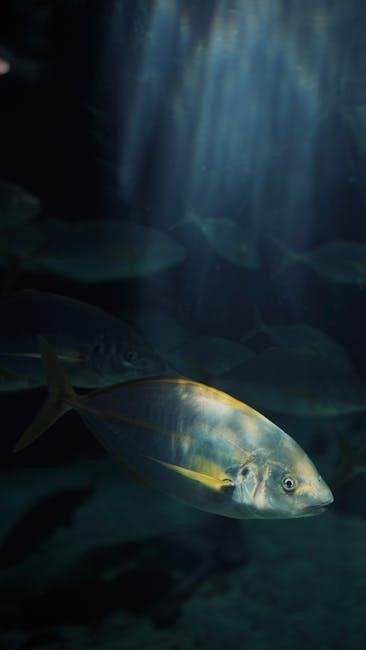
Saltwater environments are diverse, ranging from calm bays and inlets to the powerful surf of the open ocean. Understanding these differences is crucial for success. Inshore waters, like bays and estuaries, offer sheltered conditions and diverse species. Offshore environments present challenges with currents and larger fish. Tidal influences significantly impact fish behavior, creating feeding opportunities during tidal changes. Structures – rocks, reefs, and weed beds – provide cover and attract prey. Recognizing these elements allows anglers to locate productive fishing spots and adapt their strategies accordingly for a rewarding experience.
Inshore vs. Offshore Fishing
Inshore fishing targets species closer to land, in bays, estuaries, and along beaches, often using lighter tackle. It’s ideal for beginners due to calmer waters and accessible fishing spots. Offshore fishing ventures into deeper ocean waters, pursuing larger, pelagic species with heavier gear. This demands more experience and robust equipment. Bays and backwaters support species like croaker and whiting, while offshore trips target tuna and marlin. Choosing between them depends on experience, target species, and available resources, offering varied angling adventures.
Key Fish Species for Beginners
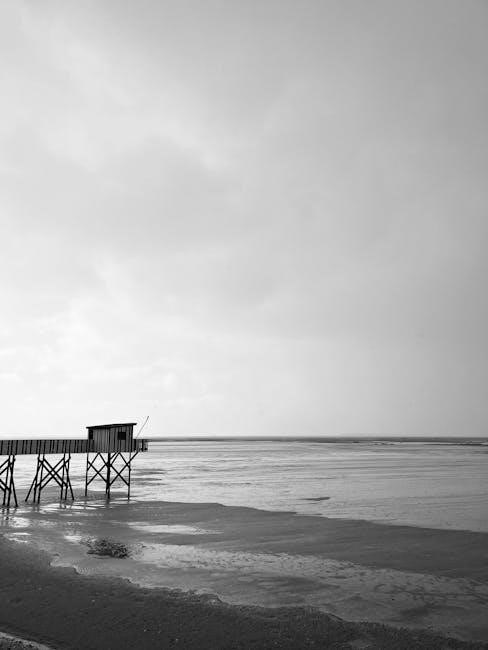
Beginner anglers should target readily available and relatively easy-to-catch species. Whiting, croaker, and spot are excellent choices in bays and backwaters, responding well to simple rigs and natural bait. Pinfish and baby seabass also offer good introductory experiences. These species aren’t overly strong fighters, allowing beginners to practice techniques. As skill grows, consider redfish or flounder. Understanding their habitats and behaviors increases success, building confidence and enjoyment in saltwater fishing.
Essential Saltwater Fishing Gear
Successful saltwater fishing demands appropriate gear. A medium-action rod paired with a spinning or conventional reel is a versatile starting point. Fishing line strength should match target species – 10-20lb test is common. Hooks, leaders, and swivels are crucial for secure connections and preventing line twist. Don’t forget essential accessories like pliers, a knife, and a tackle box. Investing in quality gear enhances the experience and improves your chances of landing a catch.
Choosing the Right Fishing Rod
Selecting a fishing rod hinges on your target species and fishing style. For inshore fishing, a 6-7 foot medium-action rod offers versatility. Offshore pursuits demand heavier, longer rods (7-9 feet) with increased power. Graphite rods are sensitive, while fiberglass provides durability. Consider a rod’s line and lure weight ratings. A comfortable grip and quality guides are also essential. Beginners should start with a versatile, all-around rod before specializing.
Selecting Appropriate Fishing Reels
Choosing the right reel is crucial for a successful saltwater experience. Spinning reels are user-friendly, ideal for beginners and lighter applications. Conventional reels offer greater power and line capacity, suited for larger fish and offshore fishing. Consider the reel’s gear ratio – lower ratios provide more power, higher ratios faster retrieves. Corrosion resistance is paramount in saltwater; look for sealed reels. Ensure the reel size matches your rod and target species for optimal performance.
Importance of Fishing Line
Fishing line is the vital connection between angler and fish. Monofilament is affordable and versatile, offering good stretch. Fluorocarbon is nearly invisible underwater, excellent for clear conditions and wary fish. Braided lines provide exceptional strength and sensitivity, ideal for detecting subtle bites. Saltwater demands abrasion resistance; choose lines specifically designed for marine environments. Line weight (test) should match your target species and fishing conditions. Regular inspection and replacement are essential for maintaining reliability.
Hooks, Leaders, and Swivels
Selecting the right terminal tackle is crucial. Hooks must be sharp and appropriately sized for your bait and target fish. Circle hooks are excellent for catch-and-release, while J-hooks offer quicker setting ability. Leaders, often fluorocarbon, provide abrasion resistance and invisibility near the hook. Swivels prevent line twist, especially when using lures. Barrel swivels are common, while snap swivels allow for quick lure changes. Consider using heavier tackle when fishing around structures.
Bait and Lures: A Detailed Comparison
Choosing between bait and lures depends on species and conditions. Natural bait, like worms or shrimp, excels at attracting fish with scent and taste. Artificial lures, such as jigs and plugs, offer versatility and durability. Lures mimic prey, triggering predatory instincts. Effective lure selection requires understanding water clarity and fish behavior. Pairing lures with the right presentation is key. Structures like rocks and weed beds often hold fish attracted to both bait and lures.
Natural Bait Options
Numerous natural baits entice saltwater fish. Shrimp is a universal favorite, effective for many species. Worms, particularly bloodworms and sandworms, are excellent for bottom feeders. Small fish like mullet or pilchards attract larger predators. Crabs are irresistible to species like black drum and sheepshead. Bait presentation is crucial; secure it firmly to the hook. Consider using bait buckets to keep your offerings fresh and lively, maximizing their appeal to hungry fish.
Artificial Lures and Jigs
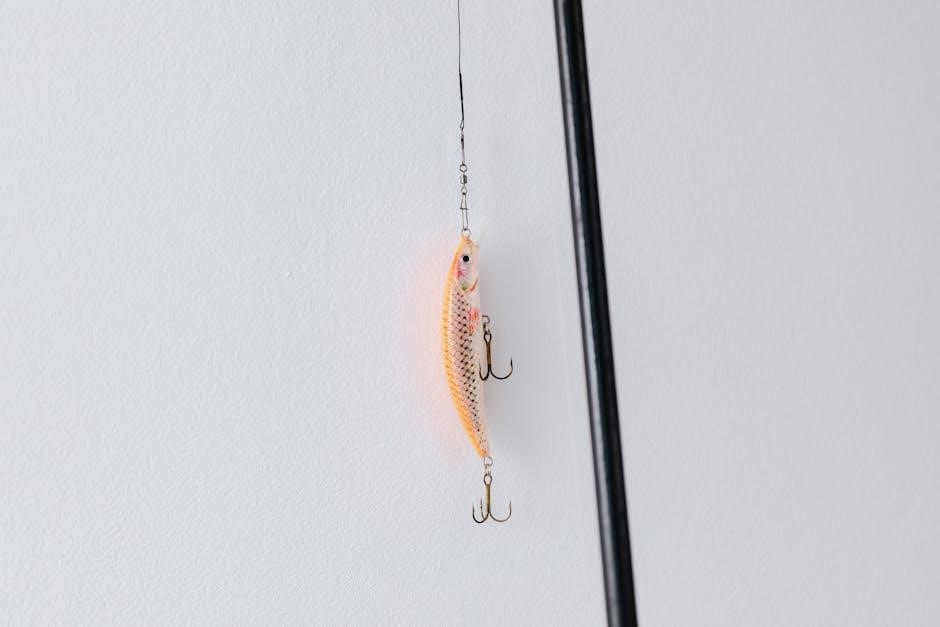
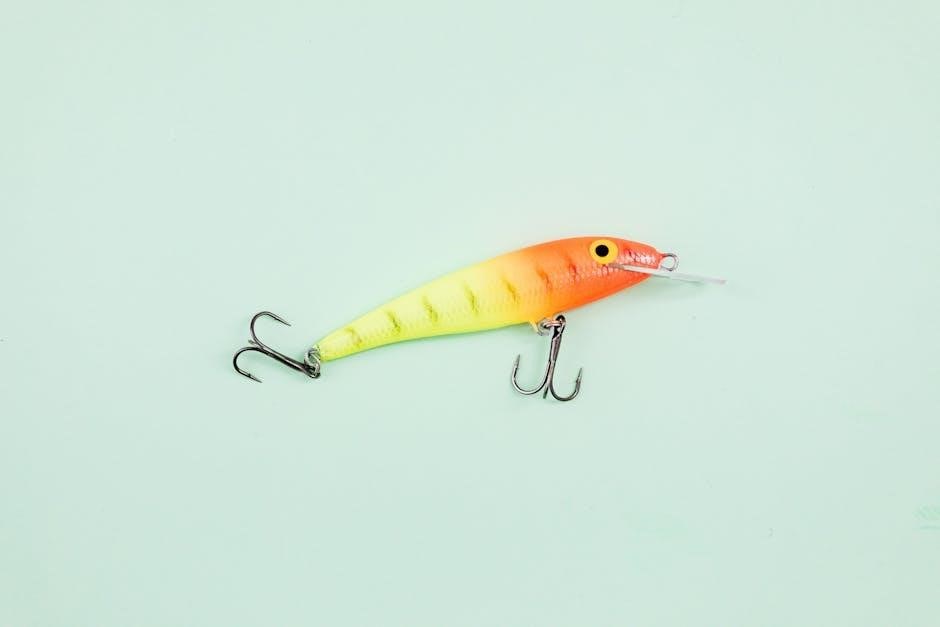
Artificial lures offer versatility and can mimic various prey. Spoons create flash and vibration, attracting attention. Plugs resemble baitfish, ideal for trolling or casting. Soft plastic lures, like shrimp imitations or worms, are highly effective when rigged correctly. Jigs, weighted hooks with a lure body, excel at bottom fishing. Experiment with colors and retrieve speeds to find what triggers strikes. Matching the lure size to the target species is also vitally important for success.
Fundamental Fishing Techniques
Mastering core techniques is crucial for saltwater success. Accurate casting delivers your bait or lure to the target area. Vary retrieval methods – slow and steady, or quick and erratic – to entice bites. Solid knot tying ensures your line remains secure under pressure. Practice the improved clinch knot and Palomar knot for reliable connections. Understanding presentation, how your lure moves, is key. Patience and observation are vital components of effective saltwater angling.
Casting Techniques for Saltwater
Saltwater casting demands adaptability. The overhead cast is versatile for distance, while the sidearm cast excels in windy conditions. For accuracy, utilize a pendulum cast, swinging the rod before releasing. Consider the weight of your lure or bait; heavier requires more power. Practice smooth, controlled motions to avoid tangles. Adjust your technique based on the target species and environment. Mastering these casts will significantly improve your reach and presentation, increasing your chances of a successful catch.
Retrieval Methods and Presentation
Effective retrieval mimics natural prey movement. A slow, steady retrieve works well for bottom-dwelling fish, while a faster pace attracts aggressive predators. Jerky retrieves with pauses can entice strikes from lures. Vary your speed and action to find what triggers a response. Presentation is key – consider the current and structure. Present your bait or lure naturally, allowing it to drift or move with the flow. Experiment with different techniques to discover what works best in each situation.
Knot Tying for Saltwater Fishing
Strong knots are crucial for landing fish! The Palomar knot is excellent for braided line, offering high strength. The Improved Clinch knot is versatile for monofilament and fluorocarbon. Learn the Kryston Loop knot for creating a reliable loop connection. Practice tying these knots repeatedly until proficient. Weak knots lead to lost fish and frustration. Always moisten the line before tightening to reduce friction and maintain strength. Regularly inspect knots for wear and retie when necessary.
Reading the Water: Finding Fish Hotspots
Successful anglers become water readers! Understanding tides and currents reveals where fish congregate, as they expend less energy. Identify structures like rocks, weed beds, and drop-offs – these provide cover and attract baitfish. Beach fishing requires observing the surf; troughs often hold fish. Look for changes in water color or surface activity indicating fish presence. Pay attention to bird activity, as they often feed on the same baitfish as targeted species.
Understanding Tides and Currents
Tides significantly impact fish behavior! Incoming tides often bring baitfish and stimulate feeding, while outgoing tides can flush out prey. Current creates natural drift, carrying scent and attracting predators. Fish often position themselves up-current from structures, waiting for food. Learning to read tide charts and observe current direction is crucial. Slack tides, with minimal water movement, can sometimes be productive, but often fish become less active.
Identifying Structures and Cover
Fish gravitate towards structure for ambush points and protection! Look for rocks, reefs, wrecks, jetties, and oyster beds. These areas disrupt current flow, creating feeding lanes. Weed beds and mangrove roots offer cover for smaller fish, attracting larger predators. Drop-offs and ledges provide vertical relief where fish congregate. Utilize charts, sonar, or visual observation to locate these hotspots. Understanding how structure interacts with tides and currents is key to locating fish.
Beach Fishing: Reading the Surf
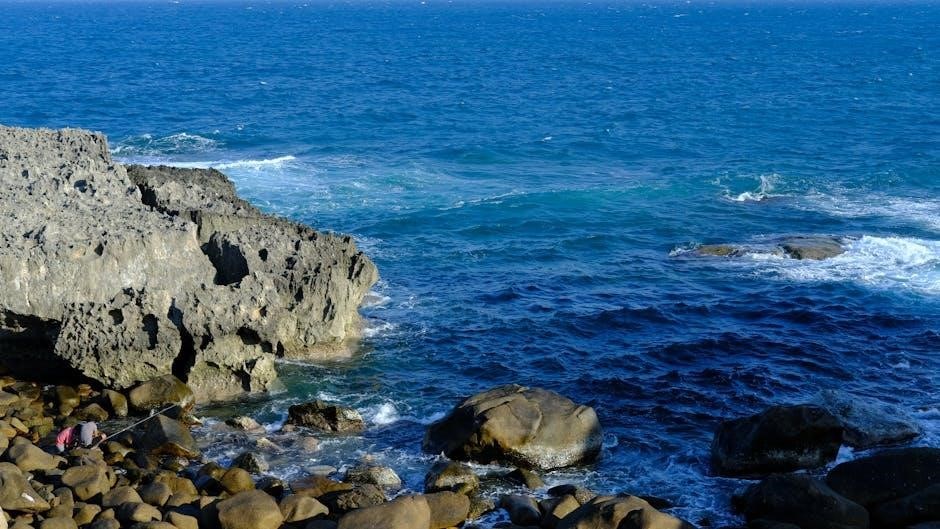
Decoding the surf is crucial for beach success! Observe wave patterns – troughs often hold baitfish, attracting predators. Look for irregularities in the waves, indicating sandbars or channels. Rip currents can carry bait and fish offshore, creating feeding opportunities. Discolored water suggests deeper channels or shifting sands. Wind direction influences wave action and fish location. Pay attention to foam lines, as they often mark where currents converge, concentrating fish.
Surf Fishing Techniques
Mastering surf fishing requires specialized approaches! Employ long casts to reach beyond breaking waves, utilizing pyramid or shock leader sinkers for distance. Effective rigs include the high-low, three-way swivel, or shock leader setups. For bays and backwaters, 3/8oz to 1oz weights with appropriately sized hooks are ideal for species like croaker and whiting. Patience is key; allow the current to present your bait naturally, and be prepared for powerful strikes.
Choosing the Right Weight for Surf Fishing
Weight selection is crucial for surf fishing success! Heavier weights (4-8oz) combat strong currents and long-shore drift, maintaining bait position. Lighter weights (2-4oz) are suitable for calmer conditions and shorter casts. Consider the rod’s rating; exceeding it risks damage. Pyramid sinkers offer stability, while shock leaders minimize line abrasion. Adjust weight based on wave size, current speed, and desired casting distance for optimal presentation.
Effective Surf Fishing Rigs
Several rigs excel in surf conditions! The high-low rig, featuring two hooks above a sliding sinker, increases bait presentation options. A shock leader rig protects against line abrasion from rocks and shells. The Carolina rig, with a swivel and leader, allows for natural bait movement. Three-way swivels create versatile setups. Experiment with loop knots for secure hook attachment, ensuring reliable connections in challenging saltwater environments for consistent catches.
Bay and Backwater Fishing Strategies
Focus on shallow water hotspots! Target areas near structures like docks, mangroves, and grass flats where fish congregate. Utilize light tackle – 3/8oz to 1oz weights and appropriately sized hooks – for finesse presentations. Effective techniques include casting soft plastics or live bait along edges. Patience is key; slowly retrieve lures, mimicking natural prey movements. Backwaters offer sheltered conditions, ideal for beginners seeking consistent action with species like croaker and whiting.
Targeting Fish in Shallow Waters
Shallow bays and backwaters teem with life! Fish often seek refuge and forage in these areas. Employ a stealthy approach, minimizing noise and shadows. Present baits or lures naturally, mimicking the movements of crabs, shrimp, or small fish. Light tackle is crucial for sensitivity and accurate casting. Focus on structure – grass flats, oyster beds, and creek mouths – where predators ambush prey. Polarized sunglasses enhance visibility, revealing fish and underwater features.
Using Light Tackle for Bay Fishing
Light tackle elevates the bay fishing experience! Spinning rods paired with 1000-2500 size reels are ideal. Six to ten-pound test braided line offers sensitivity and strength. Downsize your leaders to fluorocarbon, around 8-12lb, for invisibility. This setup allows for precise lure presentation and enhances feel when detecting subtle bites. It’s perfect for targeting species like speckled trout, redfish, and flounder. Enjoy the thrilling fight these fish provide on lighter gear!
Safety Precautions for Saltwater Fishing
Prioritize safety during every saltwater fishing trip! Always monitor weather forecasts closely, being aware of changing conditions and potential storms. When boating, ensure you have essential safety gear – life jackets, flares, a VHF radio, and a first-aid kit. Practice responsible fish handling, using appropriate tools to avoid injury. Be mindful of your surroundings, and inform someone of your fishing plans and expected return time. Awareness is key to a safe and enjoyable experience.
Weather Awareness and Monitoring
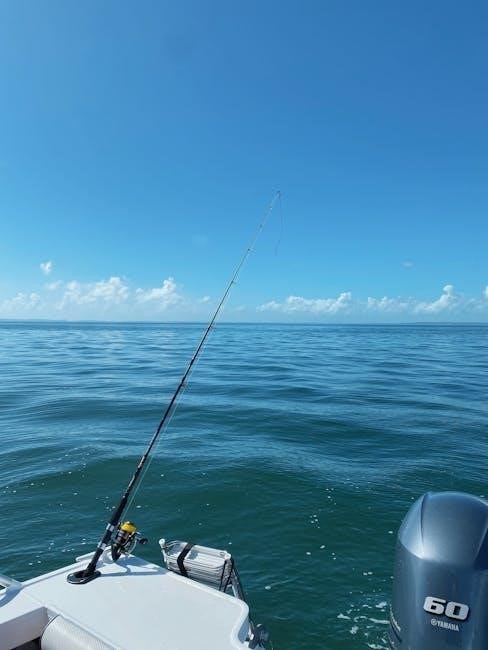
Constant weather vigilance is crucial for safe saltwater fishing. Before heading out, meticulously check marine forecasts for wind speed, wave height, and potential thunderstorms. Utilize weather apps and NOAA radio for real-time updates. Be prepared to alter plans or return to shore if conditions deteriorate unexpectedly. Sudden squalls and changing tides can create hazardous situations. Prioritize safety by respecting the power of the ocean and staying informed.
Boat Safety Essentials
Prioritize boat safety with a comprehensive checklist before each trip. Ensure you have properly fitted life jackets for every passenger, a functioning marine radio, flares, and a first-aid kit. Verify navigation lights are operational and carry a sound-producing device like a horn. Regularly inspect the boat for mechanical issues and fuel leaks. Know your boat’s capacity and adhere to it. A well-maintained vessel and prepared crew are paramount for a secure outing.
Handling Fish Responsibly
Practice responsible fish handling to ensure conservation and ethical angling. Wet your hands before touching fish to protect their protective slime coat. Use barbless hooks or crimp the barbs to minimize injury during removal. Support the fish horizontally, avoiding pressure on internal organs. If releasing, revive the fish by gently moving it forward in the water until it swims away strongly. Adhere to size and bag limits, promoting sustainable fisheries for future generations.
Regulations and Licensing
Understanding and adhering to fishing regulations is crucial for conservation. State-specific rules govern size limits, bag limits, and permitted fishing methods. Always check current regulations before each trip, as they can change frequently. Obtaining a valid fishing license is typically required for anglers aged 16 or older. Licenses support fisheries management and habitat restoration efforts. Ignoring regulations can result in fines and penalties, so prioritize responsible angling practices.
State-Specific Fishing Regulations
Each coastal state establishes unique saltwater fishing regulations. These cover permitted species, minimum and maximum size limits, daily bag limits, and seasonal closures. Regulations also dictate allowed fishing gear – hook types, net usage, and size restrictions. Some areas may have specific restrictions on harvesting shellfish or protecting vulnerable habitats. Always consult the official state fisheries agency website or printed regulations booklet before fishing to ensure full compliance and avoid potential penalties.
Obtaining a Fishing License
A valid fishing license is typically required for saltwater angling. Licenses are usually issued by state fisheries agencies and can often be purchased online, at local tackle shops, or through authorized vendors. Requirements vary by state; some offer short-term licenses for visitors, while others have resident and non-resident options. Exemptions may exist for certain age groups or disabilities. Ensure you carry your license while fishing and understand the associated regulations.
Beginner-Friendly Fishing Locations
Starting your saltwater journey? Consider easily accessible piers and jetties, offering calmer waters and established fishing spots. Bays and backwaters provide sheltered environments ideal for learning basic techniques. Florida’s Gulf Coast, North Carolina’s Outer Banks, and Texas’s coastal bays are popular choices. Research local parks and public access points for convenient fishing opportunities. Remember to check local regulations and familiarize yourself with the area before heading out!
Advanced Techniques for Experienced Anglers
Elevate your skills with specialized methods! Master trolling techniques, dragging lures behind the boat to cover vast areas and target pelagic species. Explore bottom fishing strategies, utilizing heavier weights and specialized rigs to reach fish holding near the seabed. Refine your knowledge of current breaks and structure, employing advanced sonar interpretation. Perfecting these techniques demands dedication, experience, and a deep understanding of saltwater ecosystems;
Trolling Techniques
Cover water efficiently and locate active fish! Trolling involves dragging lures or bait behind a moving boat, maintaining consistent speed and depth. Utilize various lure types – diving plugs, skirts, and spoons – adjusting based on target species and water conditions. Employ downriggers to precisely position lures at desired depths. Monitor your lines closely for strikes, and practice effective hooksets while maintaining boat control. Successful trolling requires patience and precise adjustments.
Bottom Fishing Strategies
Target species dwelling near the seabed! Bottom fishing involves presenting bait or lures directly on the ocean floor. Utilize heavier weights to maintain contact, compensating for currents and depth. Effective rigs include Carolina, three-way, and knocker rigs. Focus on structure – reefs, wrecks, and ledges – where fish congregate. Be patient and sensitive to subtle bites, setting the hook firmly upon detection. Vary bait presentation and weight to optimize success.
Maintaining Your Fishing Gear
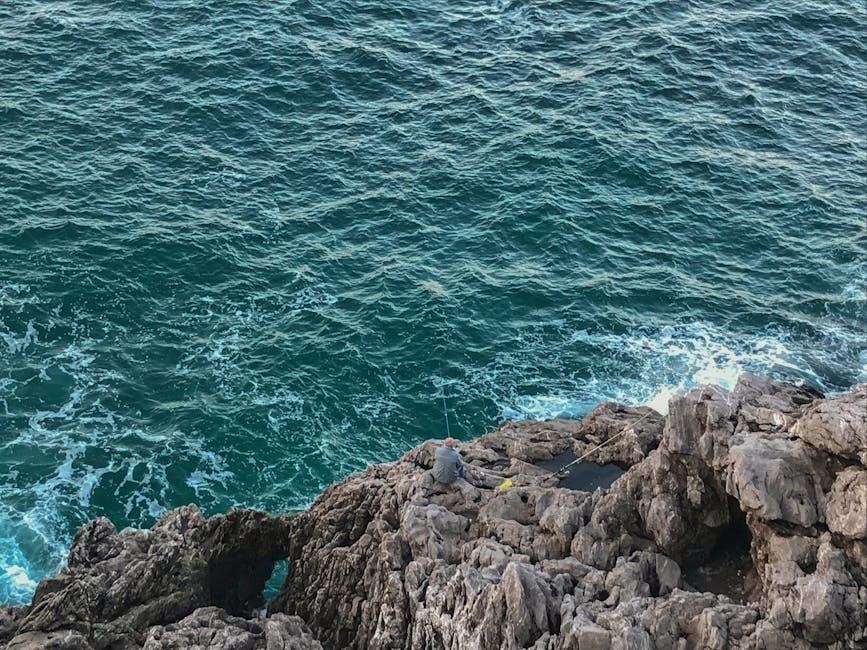
Prolong the life and performance of your equipment! Regularly rinse rods and reels with freshwater after each use, removing salt and debris. Lubricate reels as needed, following manufacturer instructions. Inspect fishing line for abrasions and replace it annually, or more frequently with heavy use. Clean hooks, leaders, and swivels to prevent corrosion. Proper storage in a cool, dry place is crucial for longevity, safeguarding your investment for countless fishing trips.
Cleaning and Storing Rods and Reels
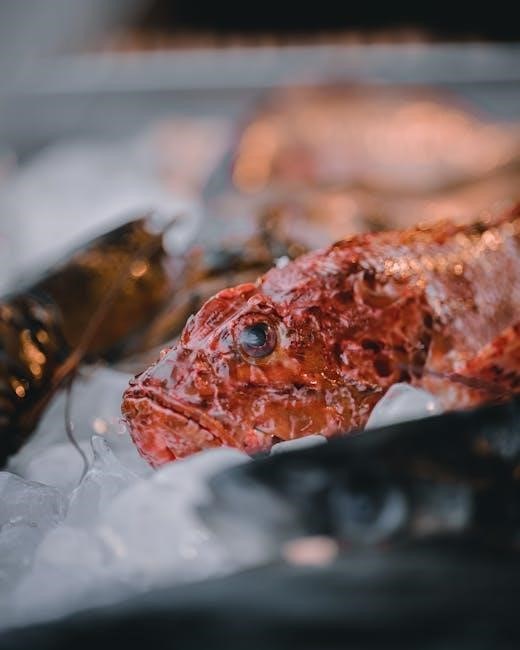
Preserve your rods and reels for years of reliable service! After each saltwater excursion, thoroughly rinse both with fresh water, paying attention to reel seats and line rollers. Use a mild soap if necessary. Dry completely before storing. For reels, apply a reel protectant. Store rods horizontally or vertically, avoiding extreme temperatures and direct sunlight. Protect reels in cases or covers to prevent dust and damage, ensuring optimal performance.
Line Maintenance and Replacement
Maintain line integrity for optimal casting and fish-fighting power! Regularly inspect your line for abrasions, fraying, or weakened spots, especially after encounters with structure. After each use, consider using a line conditioner to reduce friction and extend its lifespan. Replace your line at least annually, or more frequently with heavy use. Spool carefully, avoiding twists, and ensure proper tension for smooth performance. A fresh line dramatically improves casting distance and reliability.
Resources for Saltwater Fishing Information
Expand your knowledge and connect with fellow anglers! Explore online fishing forums and communities like Reddit’s r/FishingForBeginners for shared experiences and advice. Visit local tackle shops; their experts offer invaluable insights into regional hotspots and techniques. Don’t hesitate to consult experienced guides for personalized instruction. Websites and apps provide updated fishing reports, regulations, and tide charts. Continuous learning enhances your success and enjoyment on the water.
Online Fishing Forums and Communities
Dive into a wealth of shared knowledge! Platforms like Reddit’s r/FishingForBeginners foster vibrant discussions, allowing you to ask questions, share catches, and learn from others’ experiences. These online spaces offer diverse perspectives on tackle, techniques, and local fishing conditions. Engage with experienced anglers, discover new strategies, and stay updated on the latest trends. Forums provide a supportive environment for continuous learning and improvement in your saltwater fishing journey.
Local Tackle Shops and Guides
Unlock expert insights and personalized advice! Local tackle shops are treasure troves of information, offering tailored recommendations on gear, bait, and hotspots. Knowledgeable staff can guide you toward the right equipment for your target species and fishing style. Consider hiring a local fishing guide for an immersive learning experience. They provide invaluable on-the-water instruction, increasing your chances of success and ensuring a safe, rewarding adventure.